If you want your website to get more traffic from search engines, you need to know what people are searching for, what your competitors are doing, and where your website is losing opportunities. This is where
Ahrefs comes in.
Ahrefs is an SEO and marketing platform that helps website owners, bloggers, marketers, agencies, and businesses research keywords, analyze competitors, check backlinks, audit websites, track rankings, and monitor visibility across search and AI platforms.
It brings many SEO tasks into one place, which can save you from using several different tools for keyword research, competitor analysis, backlink checking, and technical SEO.
In this guide, we'll look at what
Ahrefs is, how it works, its main features, pricing, pros and cons, and who should consider using it.

What Is Ahrefs?
Ahrefs is an SEO and marketing platform designed to help businesses improve their visibility on search engines and across newer AI-powered search experiences.
The platform provides tools for keyword research, competitor research, backlink analysis, technical SEO audits, rank tracking, content research, and AI visibility monitoring.
One of the reasons SEO professionals use
Ahrefs is because it combines several important SEO activities in one dashboard.
For example, you can use it to:
- Find keywords people search for
- See which keywords competitors rank for
- Analyze backlinks
- Find pages bringing organic traffic
- Discover content opportunities
- Check technical SEO problems
- Track keyword rankings
- Monitor your brand's visibility in AI search
- Research websites in your industry
This makes
Ahrefs useful for both planning an SEO strategy and checking whether that strategy is working.
How Does Ahrefs Work?
Ahrefs works by collecting and analyzing web and search data and turning that information into SEO reports and tools.
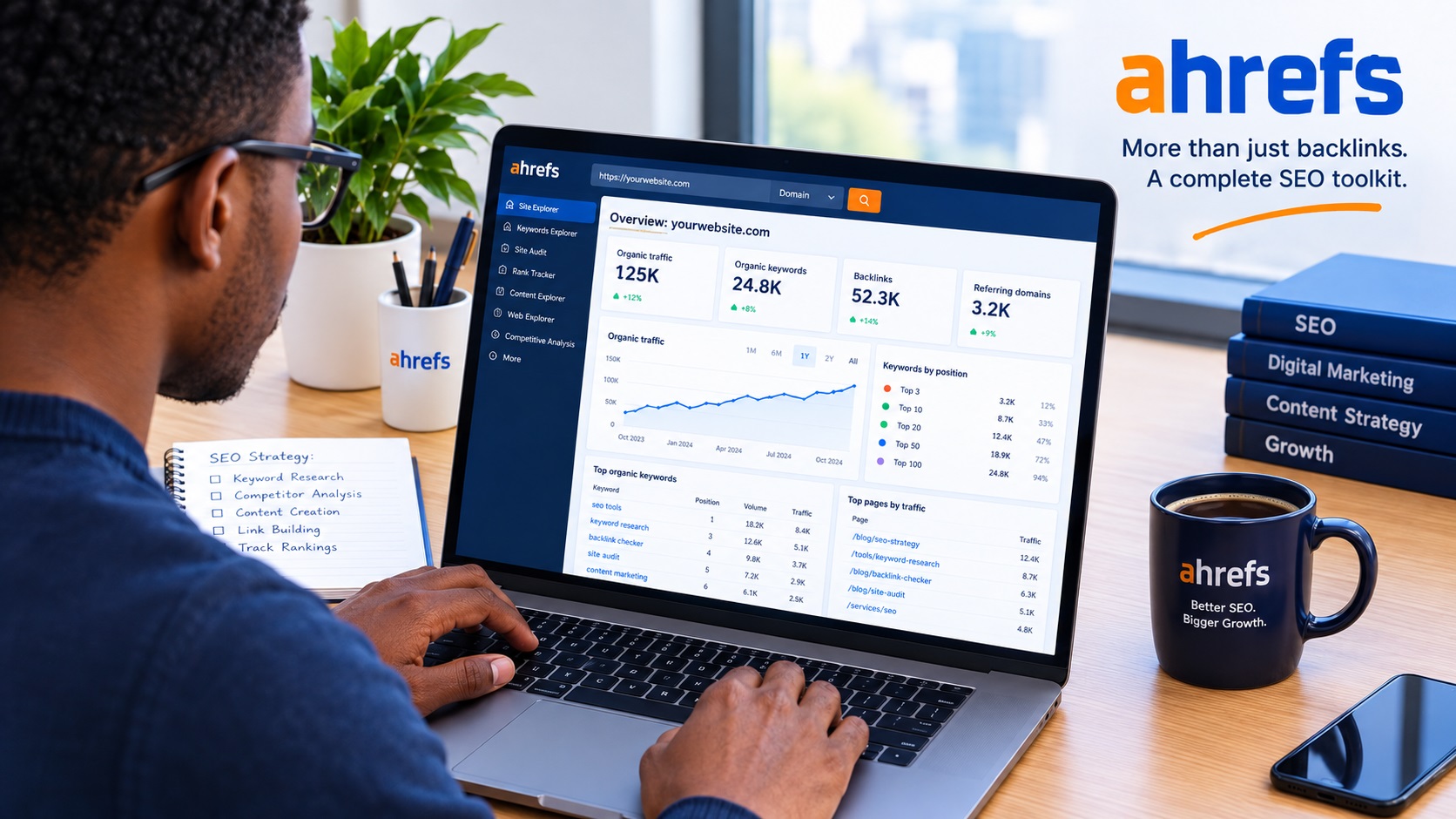
For example, you can enter a website into Site Explorer and see information about its organic search performance, backlinks, top pages, and keywords.
You can also enter a keyword into Keywords Explorer to research its search potential and related opportunities.
A typical workflow might look like this:
Keyword Research → Competitor Analysis → Content Creation → Technical SEO Audit → Rank Tracking → Performance Monitoring
This means you can use
Ahrefs throughout different stages of your SEO process rather than using it for only one task.

Key Features of Ahrefs
1. Keywords Explorer
Keywords Explorer is one of the main tools inside
Ahrefs.
It helps you research keywords and understand metrics that can help with SEO planning. You can use it to discover keyword ideas and evaluate search opportunities.
Instead of simply choosing keywords with high search volume, you can look at different SEO metrics and search results to decide which topics may be worth targeting.
This can be especially useful when planning blog posts and content clusters.
2. Site Explorer
Site Explorer lets you analyze websites and understand their organic search and backlink performance.
You can use it to find:
- Organic keywords
- Top-performing pages
- Backlinks
- Referring websites
- Competitor opportunities
- Pages receiving organic traffic
For content marketers, this can be useful for finding out what type of content is already performing well in a particular niche.
3. Site Audit
Technical SEO problems can make it harder for search engines to crawl and understand a website.
Ahrefs Site Audit scans websites and identifies technical and on-page SEO issues. These can include problems with titles, meta descriptions, broken links, redirects, indexability, images, structured data, JavaScript, CSS, and more.
The tool also provides an overall SEO health score and recommendations that can help you identify areas that need attention.
4. Rank Tracker
Rank Tracker helps you monitor how your keywords perform in search results over time.
You can track rankings across desktop and mobile and monitor rankings in different locations. It also supports tracking various SERP features, including AI Overviews.
This is useful if you regularly publish content and want to see whether your SEO efforts are improving your search visibility.
5. Content Explorer
Content Explorer helps you discover content that performs well across the web.
You can use it to research topics, find popular pages, identify potential link opportunities, and study the types of content that attract attention in your industry.
For bloggers and content teams, this can help turn a general topic idea into a more focused content strategy.
6. Backlink Analysis
Backlinks remain an important part of SEO, and
Ahrefs has long focused heavily on backlink data.
You can use the platform to investigate which websites link to your site or your competitors.
This can help you identify:
- Potential link-building opportunities
- Competitor backlinks
- Broken links
- Referring domains
- Pages attracting links
Understanding where competitors get their links can also give you ideas for your own outreach and content strategy.
7. Brand Radar and AI Visibility
SEO is no longer limited to traditional search.
Ahrefs also offers Brand Radar, which is designed to help businesses monitor how their brands appear across AI platforms.
This can be useful for businesses that want to understand how their brand appears as search behavior changes.
Ahrefs Pricing: How Much Does Ahrefs Cost?
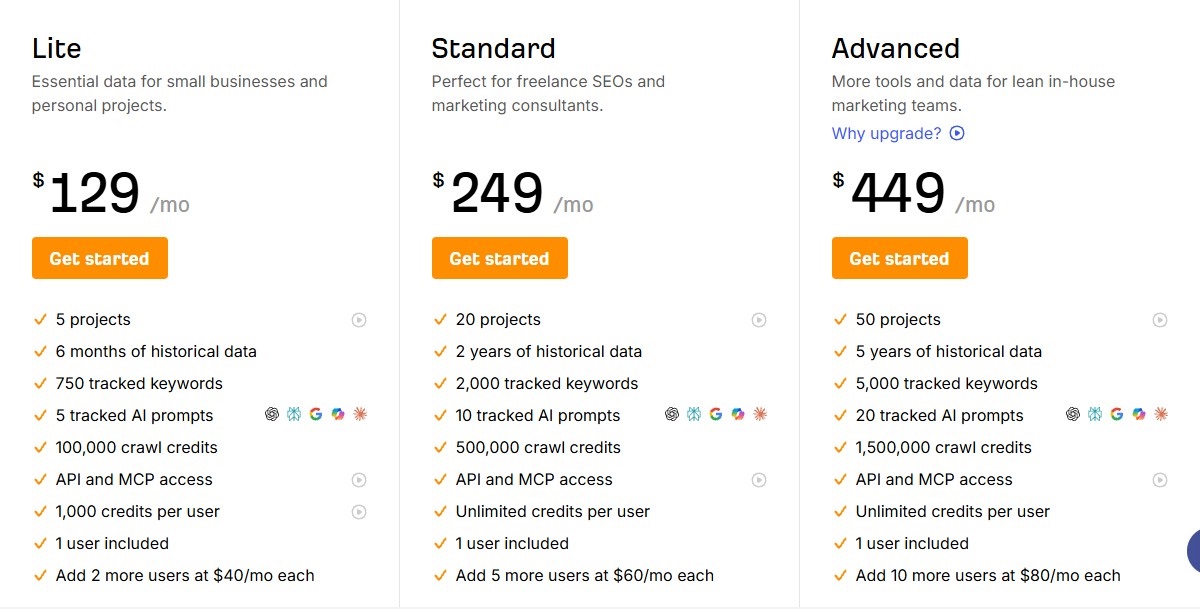
Ahrefs currently has several pricing options, including a free account, Starter, Lite, Standard, Advanced, and Enterprise plans.
The current U.S.-dollar pricing shown by
Ahrefs is:
| Plan |
Monthly Price |
| Free |
$0 |
| Starter |
$29/month |
| Lite |
$129/month |
| Standard |
$249/month |
| Advanced |
$449/month |
| Enterprise |
$1,499/month |
Prices are in U.S. dollars and may be subject to applicable taxes. Annual billing can provide savings compared with monthly billing.
Pricing and plan features can change, so check the official
Ahrefs pricing page before purchasing.
Ahrefs Free
The free account is useful if you want to try some of the platform's tools without paying for a subscription.
For verified websites, the free account provides limited access to several tools, including Site Explorer, Site Audit, Web Analytics, Social Media Manager, and AI Content Helper.
This makes the free option a practical way to explore the platform before upgrading.
Ahrefs Starter
The Starter plan costs $29 per month and is designed for people who need more than the free account provides.
It includes access to tools such as Site Explorer, Keywords Explorer, Site Audit, Rank Tracker, and the
Ahrefs SEO Toolbar.
Ahrefs Lite
The Lite plan costs $129 per month and is aimed at small businesses and personal projects.
The plan provides higher usage limits than the Starter plan and includes features for keyword research, rank tracking, site auditing, competitor research, and backlink analysis.
Ahrefs Standard
The Standard plan costs $249 per month.
It increases the available project, keyword tracking, crawl, historical data, and reporting limits.
This plan can be useful for SEO professionals and teams managing multiple websites or larger SEO campaigns.
Ahrefs Advanced
The Advanced plan costs $449 per month.
It provides higher limits and is designed for larger in-house marketing teams that need more SEO data and project capacity.
Ahrefs Enterprise
Enterprise pricing starts at $1,499 per month, with an annual commitment required.
It is intended for organizations that need larger limits, advanced controls, API access, security features, and other enterprise-level capabilities.
Is There a Free Trial?
Ahrefs does not currently offer a traditional free trial for its paid subscriptions.
Instead, it provides a free account with limited access to several tools.
This gives new users a way to explore some of the platform before deciding whether they need a paid plan.
Who Should Use Ahrefs?
Bloggers
Bloggers can use
Ahrefs to find keyword ideas, research competitors, discover content opportunities, and monitor search rankings.
SEO Professionals
SEO specialists can use the platform for keyword research, technical audits, competitor research, backlink analysis, and rank tracking.
Businesses
Businesses can use
Ahrefs to understand how their websites perform in search and identify opportunities to attract more organic traffic.
Marketing Agencies
Agencies managing multiple websites can use higher-tier plans to manage projects, track rankings, audit websites, and create SEO reports.
Content Teams
Content teams can use
Ahrefs to research topics and competitors before creating new articles, landing pages, and other content.
Pros and Cons of Ahrefs
Pros
- Strong keyword research tools
- Extensive backlink analysis
- Detailed competitor research
- Technical SEO auditing
- Keyword rank tracking
- Content research tools
- Free account available
- AI visibility tracking
- Useful for SEO research and ongoing monitoring
Cons
- Paid plans can be expensive
- Some advanced features require higher plans
- Usage limits vary by plan
- The number of features can feel overwhelming for beginners
- It may be more than a small website needs
Is Ahrefs Easy to Use?
The answer depends on what you want to do.
The basic functions are relatively straightforward. For example, entering a keyword into Keywords Explorer or a website into Site Explorer is simple.
The bigger challenge is understanding what to do with all the data.
If you're new to SEO, metrics such as keyword difficulty, traffic potential, referring domains, organic keywords, and backlinks may take some time to understand.
The good thing is that you don't need to use every feature from day one.
Start with the tools that match your current goal. If you're building a blog, keyword research and competitor analysis may be enough initially. As your website grows, you can add technical audits, rank tracking, backlink research, and other tools to your workflow.
Ahrefs vs. Other SEO Tools
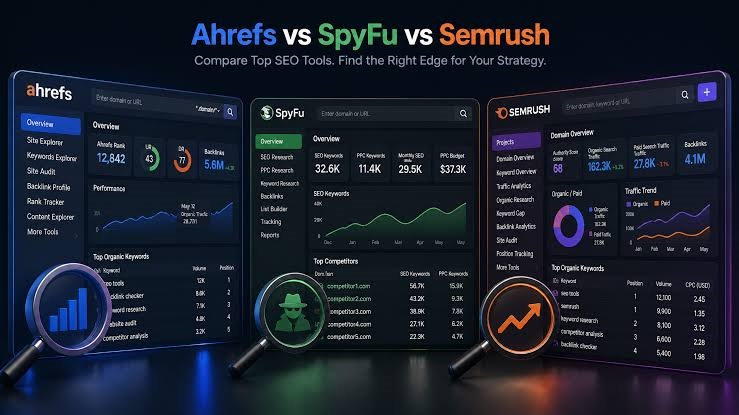
There are many SEO platforms available today, including Semrush, Moz, SE Ranking, and others.
The main thing to consider is not simply which platform has the most features. Instead, think about the type of SEO work you actually need to do.
If your main priorities are keyword research, backlink analysis, competitor research, technical SEO, content research, and rank tracking,
Ahrefs provides tools for all of these activities in one platform.
The right choice will depend on your budget, website size, team, SEO goals, and the specific data you need.
Final Thoughts on Ahrefs
Ahrefs is a comprehensive SEO and marketing platform that can help you understand your website, research competitors, discover keywords, analyze backlinks, audit technical SEO issues, and monitor search performance.
It also goes beyond traditional SEO with tools for AI visibility and other areas of digital marketing.
The free account is a useful starting point for website owners who want to explore some of the platform's capabilities without paying for a subscription. For more advanced SEO research and larger projects, the paid plans provide higher limits and additional functionality.
Before choosing a plan, consider how many websites you manage, how much keyword and backlink data you need, and which features you'll actually use.
Frequently Asked Questions About Ahrefs
What is Ahrefs used for?
Ahrefs is used for SEO tasks such as keyword research, competitor analysis, backlink research, website audits, content research, and rank tracking.
Is Ahrefs free?
Ahrefs offers a free account with limited access to some tools. Paid plans are available for users who need higher limits and additional features.
How much does Ahrefs cost?
The current paid plans start at $29 per month for Starter, while higher plans range from $129 to $1,499 per month depending on the plan and requirements.
Is Ahrefs good for beginners?
Beginners can use
Ahrefs, but the amount of SEO data and terminology can take some time to understand. Starting with basic keyword research and Site Audit can make the learning process easier.
Can Ahrefs help with keyword research?
Yes. Keywords Explorer can be used to discover keyword ideas and analyze search-related SEO data when planning content.
Does Ahrefs track keyword rankings?
Yes. Rank Tracker allows users to monitor keyword rankings and changes in search visibility over time.
Does Ahrefs analyze backlinks?
Yes. Backlink analysis is one of the core capabilities of
Ahrefs, allowing users to research backlinks and referring domains for websites.
Is Ahrefs worth using for a blog?
For a blog that is actively focused on SEO,
Ahrefs can be useful for finding content opportunities, researching keywords, analyzing competitors, and tracking rankings. Whether you need a paid plan depends on the size of your website and how much SEO data you require.
Conclusion
Ahrefs brings keyword research, competitor analysis, backlink research, technical SEO auditing, content research, and rank tracking together in one platform.
For website owners and marketers who want to make SEO decisions based on data, it provides a wide range of tools to research, monitor, and improve search visibility.
The best way to get started is to identify what you need first, explore the available free tools, and choose a plan based on your actual SEO workload.
Ready to Improve Your SEO?
If you're serious about understanding your website's search performance, researching competitors, and finding new SEO opportunities,
Ahrefs can give you the data and tools to support your SEO work.
You can start with the free account and explore the platform before deciding whether you need a paid plan.
Start using Ahrefs today and take a closer look at your website’s search performance.
Get Started With Ahrefs